Shami puja on Dussehra: why leaves are given as gold
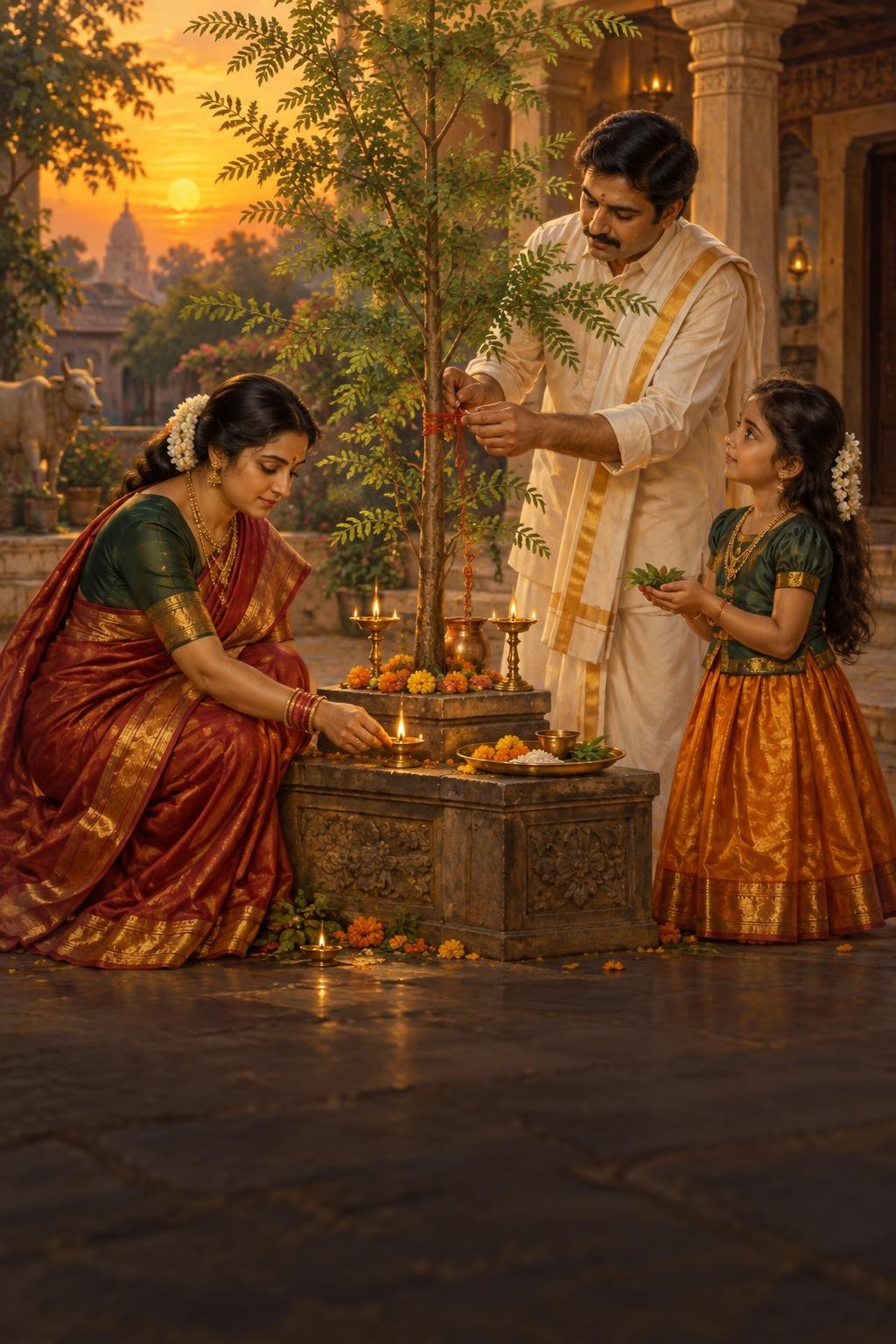
Shami puja on Dussehra: why leaves are given as gold
The short answer
Dussehra 2026 falls on Tuesday, 20 October. It marks two victories at once: Rama's defeat of Ravana and Durga's defeat of Mahishasura after nine nights of battle. The most auspicious window for puja in Delhi is roughly 2:00 PM to 2:46 PM, though it shifts by a few minutes city to city. Three things matter most today: the Aparajita puja in the afternoon, shami puja where you offer leaves and exchange them as gold, and in the evening, watching or remembering Ravan dahan. Note that some regional calendars mark Dussehra on 21 October instead; follow your family's or local temple's panchang, as both dates are kept in good faith.
Step by step
- Wake up and clean the house early. Sweep, mop, and set out the puja space. If you kept a Navratri kalash, it stays in place until the afternoon puja.
- Clean your tools, books, and vehicle in the morning. This is Ayudha puja, wipe them down, place a marigold or a roli tilak on them, and acknowledge what they help you do. Books, laptops, and kitchen knives all count.
- Prepare simple puja items. You need water in a small vessel, a diya with oil or ghee, raw rice (akshat), mauli (red thread), roli or kumkum, and a few flowers. If you have jaggery or a small sweet, keep that too.
- Find a shami tree, or prepare to pray without one. In many cities shami trees grow in parks and temple courtyards. Pick a small handful of leaves respectfully. If there is no shami tree near you, the prayer with full intention is the heart of the puja, the leaf is a symbol, not a requirement.
- Do the Aparajita and shami puja between about 1:14 PM and 3:32 PM. Light the diya, offer rice and flowers, and recite the shami shloka: Shami shamayate papam, shami shatru-vinashini. Arjunasya dhanur-dhari, Ramasya priya-darshini. Offer water at the base of the tree or at your puja space.
- Sprinkle the Navratri kalash water through the house. If you grew jaware (barley shoots), offer them at the puja space. Tuck a shoot behind your ear or in your hair as tradition holds.
- Exchange shami or apta leaves with family and neighbours. Hand them over saying "sona" (gold). This is the moment the whole custom is built around.
- In the evening, attend or watch Ravan dahan. The burning of the effigies of Ravana, Kumbhakarna, and Meghnad closes the day. If you cannot go in person, watching it together as a family carries the same intention.
- Close with a moment of quiet. This day is one of the sade teen muhurat, so auspicious that any new beginning, a first lesson, a new venture, a purchase, needs no separate muhurat. If there is something you have been waiting to start, today is the day.
What to offer
For the shami tree or your puja space, things from an ordinary kitchen:
- Raw rice (akshat)
- Water
- Roli or kumkum
- Mauli (red thread)
- A small flower or marigold petals
- Jaggery or a piece of sugar
To exchange as gold with others:
- Shami leaves (from a park or temple tree)
- Apta leaves if you are in Maharashtra or Karnataka and shami is hard to find
- If neither is available, a small flower given with the words and the intention works
If this is you
Doing this at home for the first time
You do not need a priest or an elaborate setup. Light one diya, place a few leaves or flowers in front of it, read the shloka aloud once, and offer a little water and rice. The meaning of the day is in the act of acknowledging that good can win, the ritual is just the frame around that thought.
A working person with half an hour today
Do the shami puja during your lunch break if the timing allows, or at 2:00 PM if you can step away briefly, that vijay muhurat window is short but real. If your office has a small puja corner, a diya and a few leaves there is enough. Exchange leaves with a colleague and tell them it is gold; most people smile and want to know why.
A family with children who want to understand it
Tell them two stories: the Pandavas hid their bows in a shami tree for a whole year and took them back on this exact day to fight for what was right. And a student named Kautsa needed gold to pay his teacher, so a king prayed and gold rained from a shami tree. Then hand each child a leaf and say: this is your gold for the year. Let them tuck it in a book or keep it somewhere meaningful.
Someone living abroad with no Ramlila nearby
You can do everything except watch the effigies burn. Find a park tree, shami grows in many warm-climate cities, and if not, any tree you can sit under quietly will do. Stream a Ramlila recording in the evening, or simply light a diya at sunset and read the shloka. The day does not require a crowd; it requires the intention to mark a victory over whatever has been holding you back.
Why this day matters
Dussehra holds two stories at once, and that is unusual. In the Valmiki Ramayana, Rama crosses the ocean, fights for fourteen years of exile's worth of grief, and defeats Ravana on this day. The name Dussehra itself is read as dasha-hara: the removal of the ten-headed one. But Ravana was not a simple villain. He was a great scholar, a devoted worshipper of Shiva, credited with the Shiva Tandava Stotram. His ten heads are sometimes read as mastery of the four Vedas and six shastras. His fall came from one desire he would not release. That is the moral the tradition hands down: knowledge and devotion are not enough if one attachment goes unchecked.
At the same time, the Devi Mahatmya tells us that Durga fought Mahishasura for nine days and nights and won on the tenth. The nine nights of Navratri are her battle; Vijayadashami is her victory. Both stories land on the same morning.
The shami tree sits in the middle of all of this. In the Mahabharata's Virata Parva, the Pandavas had to spend their thirteenth year of exile in complete disguise. They hid their weapons, Arjuna's Gandiva bow among them, in a shami tree. On Vijayadashami they came down from the tree, took back their arms, and revealed themselves. The tree kept their power safe until the right moment.
The gold story comes from a different tradition, strong in Maharashtra and Karnataka. A student named Kautsa needed to pay his guru-dakshina and had nothing. He went to King Raghu, who had given everything away. Raghu prayed, and Kubera rained gold coins on a shami tree. Raghu gave it all to Kautsa, who gave it to his teacher, and the people of the town took what remained from the tree's branches. Exchanging leaves today is a memory of that rain.
Common questions
Does the date change this year? I have seen 20 October and 21 October both. Dashami tithi begins around 12:50 PM on 20 October 2026 and ends around 2:11 PM on 21 October. Calendars that follow the udaya (sunrise) tithi mark Dussehra on 21 October. Both are correct within their own systems. Follow your family's panchang or your local temple's guidance.
I cannot find a shami tree anywhere nearby. Does the puja still count? Yes. The shloka, the diya, the intention, and the exchange of whatever leaf or flower you have are the substance of the puja. The shami tree is the traditional vessel for the story; the story does not disappear without it.
Is this day only for people who kept the Navratri fast? No. Shami puja and Dussehra observances are for everyone. You do not need to have fasted through Navratri to do the puja, exchange leaves, or mark the vijay muhurat with a new beginning.
Can I start something new today even if I have not done any puja? Yes. Dussehra is one of the sade teen muhurat, which means the day itself carries the auspiciousness. A formal puja is meaningful, but the day's quality does not depend on it. Start what you need to start.
Carrying something heavier?
Ask Krishna about your own situation — no judgment, just a real conversation. It's free to start.
Talk to Krishna →