Why Dussehra is two victories: Rama over Ravana, Durga over Mahishasura
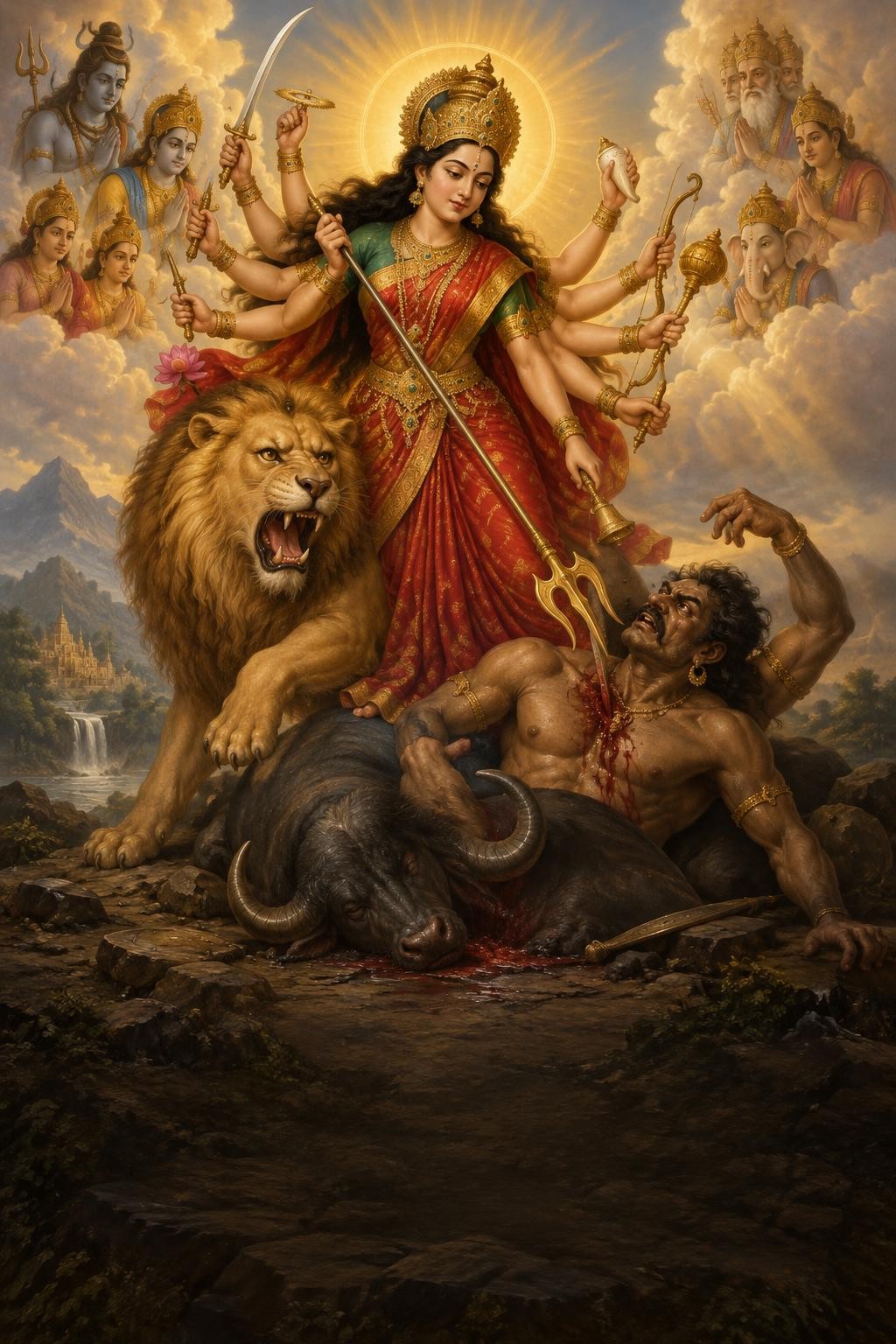
Why Dussehra is two victories: Rama over Ravana, Durga over Mahishasura
The short answer
Dussehra, also called Vijayadashami, falls on Tuesday, 20 October 2026, the tenth day of the bright fortnight of Ashwin, the morning after nine nights of Navratri. The day remembers two separate victories that landed on the same date: Rama killed the ten-headed demon king Ravana at Lanka, and Goddess Durga defeated the buffalo demon Mahishasura after nine days and nights of battle. The word Vijayadashami means "the tenth day of victory," and dasha-hara means "the destroyer of the ten-headed one." The three things that matter today are the afternoon puja (ideally between 1:14 PM and 3:32 PM IST, with the most auspicious window around 2:00 PM to 2:46 PM for Delhi), exchanging shami or apta leaves with people you love, and in the evening, watching or participating in Ravan dahan. This day is also one of the sade teen muhurat, meaning it is so auspicious that any new beginning, a business, a purchase, a child's first lesson, needs no separate auspicious time.
Step by step
- Wake up and clean the house. Sweep and mop before sunrise if you can. Lay out the puja space fresh.
- Bring out your tools, books, and instruments. Clean them, this is ayudha puja, the worship of the things you work with. Vehicles, laptops, musical instruments, kitchen tools: wipe them down and place a flower or a tilak on each.
- Set up the kalash if you kept one through Navratri. In the afternoon, sprinkle the kalash water through the rooms of the house. If you grew jaware (barley shoots), offer them or tuck a few behind your ear or in your hair.
- Do the aparahna puja between about 1:14 PM and 3:32 PM IST. This is the Aparajita puja, the goddess of the unconquered. A simple lamp, flowers, and a sincere prayer work fine. The vijay muhurat is roughly 2:00 PM to 2:46 PM for Delhi; it shifts a few minutes by city, so check your local panchang.
- Do shami puja. If you have a shami plant nearby, offer water and a flower to it and recite or read the prayer: Shami shamayate papam, shami shatru-vinashini. Arjunasya dhanur-dhari, Ramasya priya-darshini. If there is no shami tree near you, exchange apta leaves with family as "sona", gold, following the custom of Maharashtra and Karnataka.
- If you are in north India, look for a Neelkanth (Indian roller) bird during the day. Spotting one is considered auspicious. You do not need to go searching; just keep your eyes open.
- If there are young children in the family, consider Vidyarambham. In Kerala and parts of the south, children are initiated into letters today. You can do a simple version at home: guide a child's finger to write the first letter in a plate of rice or sand.
- In the evening, attend or watch Ravan dahan. The effigies of Ravana, Kumbhakarna, and Meghnad are burned to mark Rama's victory. If you cannot go out, watching it together as a family and talking about what it means is enough.
- Close the day quietly. Light a lamp, offer thanks, and if Navratri fasting is complete, break it with a proper meal.
What to offer
For the goddess puja, items from an ordinary kitchen:
- Fresh flowers, even marigolds from outside
- A small coconut or a piece of jaggery
- Betel leaf and betel nut
- Kumkum and turmeric
- A ghee lamp or any oil lamp
For shami or ayudha puja:
- Shami or apta leaves (or any green leaf if neither is available, practice varies by region)
- A flower placed on each tool or book you use for work
- A tilak of kumkum or sandalwood paste on vehicles and instruments
- Rice grains scattered as an offering
If this is you
Doing this at home for the first time
You do not need a pandit or a long ritual list. Clean your home, bring out the things you work with, light a lamp in the afternoon, and say a simple prayer asking for strength and a good outcome to whatever you are working toward. The meaning of the day is victory, connect that to something real in your own life.
A working person with half an hour today
Do the puja during your lunch break or just after. The vijay muhurat window around 2:00 PM to 2:46 PM (Delhi) is short and fits a working schedule. Place a flower on your work tools in the morning before you leave, and in the evening catch even ten minutes of Ravan dahan on a live stream.
A family with children who want to understand it
Tell both stories at dinner. Rama spent years in exile, faced an enemy far more powerful, and won because he did not give up. Durga fought for nine full nights and nights before the tenth day brought victory. Then ask your children: what is the Ravana in your life right now, which of the ten heads is giving you trouble? Lust, anger, pride, greed, delusion, envy, selfishness, injustice, cruelty, ego, pick one and talk about it honestly.
Living abroad with no Ramlila nearby
The ritual does not need a crowd. Do the afternoon puja at home, exchange shami or apta leaves (or any green leaf standing in for gold) with whoever is with you, and find a Ravan dahan livestream from Lucknow, Delhi, or Mysore, many are broadcast live. If you are starting something new, a course, a project, a habit, begin it today. That is the oldest meaning of the day.
Why this day matters
The nine nights of Navratri belong to the Goddess in her many forms. The tenth day is the day victory arrives. That is the whole shape of the festival: effort through the night, light in the morning.
Durga's battle with Mahishasura, told in the Devi Mahatmya of the Markandeya Purana, lasted nine days and nights. Mahishasura kept changing form, buffalo, lion, man, elephant, and each time the Goddess met him differently. On the tenth day she pinned him and ended it. The lesson is not that the enemy was weak. He was not. The lesson is that she did not stop.
Rama's story in the Valmiki Ramayana carries the same shape. Years of exile, a kidnapping, an ocean crossing, an impossible war. Ravana was not a simple villain, he was a great scholar, a devotee of Shiva, credited with the Shiva Tandava Stotram, master of the four Vedas and six shastras. His ten heads are read as both his learning and his undoing: kama, krodha, lobha, moha, mada, matsarya, swartha, anyaya, amanavta, ahankara, lust, anger, greed, delusion, pride, envy, selfishness, injustice, cruelty, ego. He had all that knowledge and still fell, because of one desire he would not release.
The Mahabharata adds a third thread. The Pandavas hid their weapons in a shami tree for the final year of their exile and retrieved them on Vijayadashami before the war. The shami tree became the symbol of concealed strength brought back into the open at the right moment. When you touch a shami leaf today, that is the story underneath it.
Common questions
Do I have to fast the whole day? Fasting on Dussehra is not universally required the way it is on some other days. Many families fast through Navratri and break the fast on this day. Others do a partial fast or eat only one meal. Follow what your family has always done; if you are doing this for the first time, a simple, clean meal is fine.
Which date should I follow, 20 or 21 October 2026? The Dashami tithi begins at about 12:50 PM IST on 20 October and ends at about 2:11 PM IST on 21 October. Most calendars observe Dussehra on 20 October. Some regional calendars that follow the sunrise tithi mark it on 21 October. Both are kept in good faith. Follow your family's panchang or ask your local temple.
Can I start something new today even if I am not doing any puja? Yes. Dussehra is one of the sade teen muhurat, days so auspicious that any new beginning is considered blessed without needing a separately calculated muhurat. Starting a business, making a significant purchase, beginning a course, or a child's first lesson are all traditionally begun on this day.
What if I am far from any Ramlila or Ravan dahan event? The burning of the effigies is a community expression of the same truth the day holds. If you cannot be there, the meaning does not leave you. Light a lamp at the vijay muhurat, name something in your life you want to let go of, and begin something you have been putting off. That is Vijayadashami kept honestly.
Carrying something heavier?
Ask Krishna about your own situation — no judgment, just a real conversation. It's free to start.
Talk to Krishna →